

Education
Tips for water conservation
Keep showers short and use low-flow shower heads. Think of baths as an occasional luxury (or fill only one quarter of the tub).

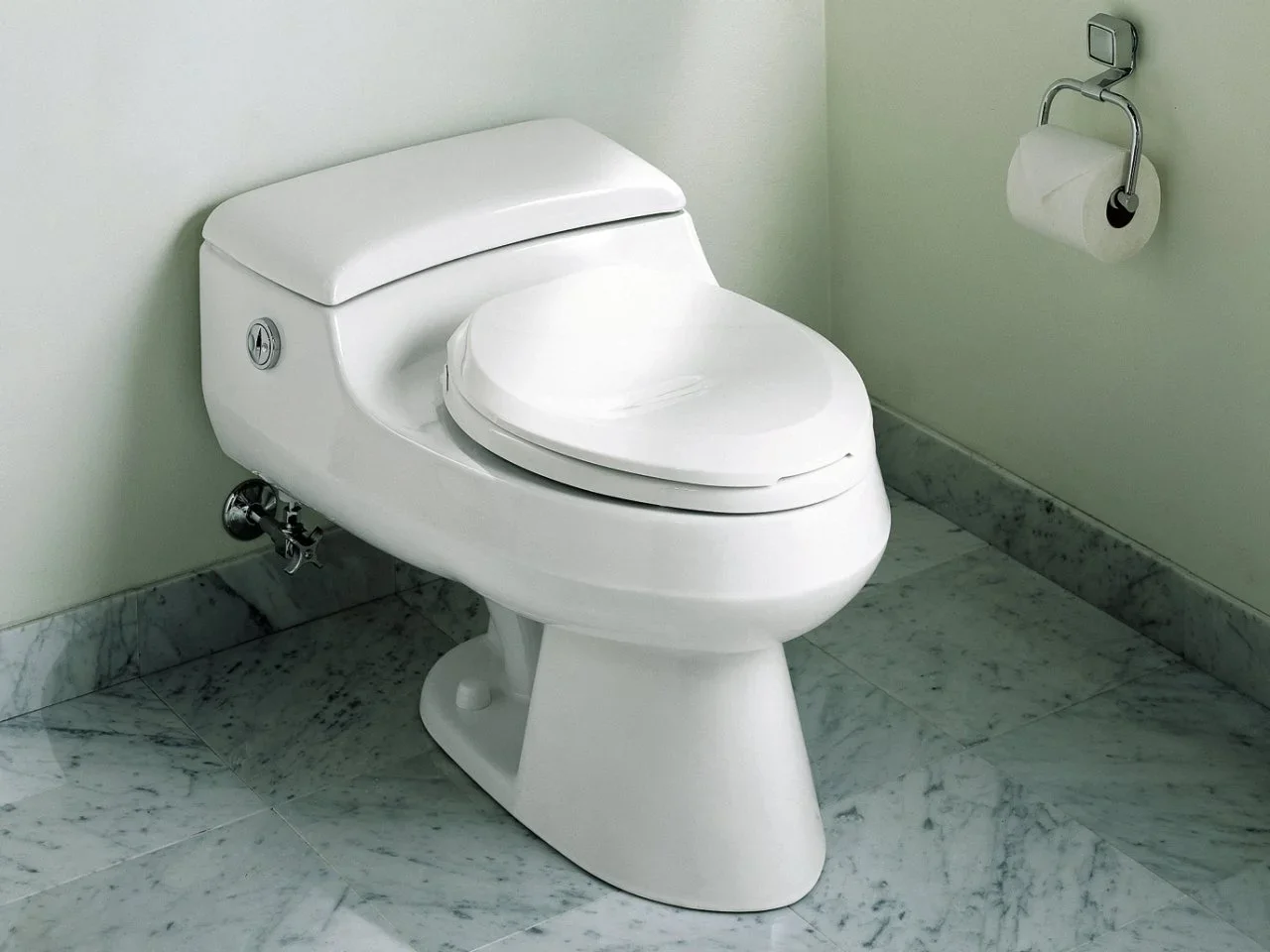
Use low-flush toilets and flush less often.
Run only full loads in dishwashers and laundry machines.
Shut off the tap as you brush your teeth, shave, or wash hands or dishes.
Run only full loads in dishwashers and laundry machines.


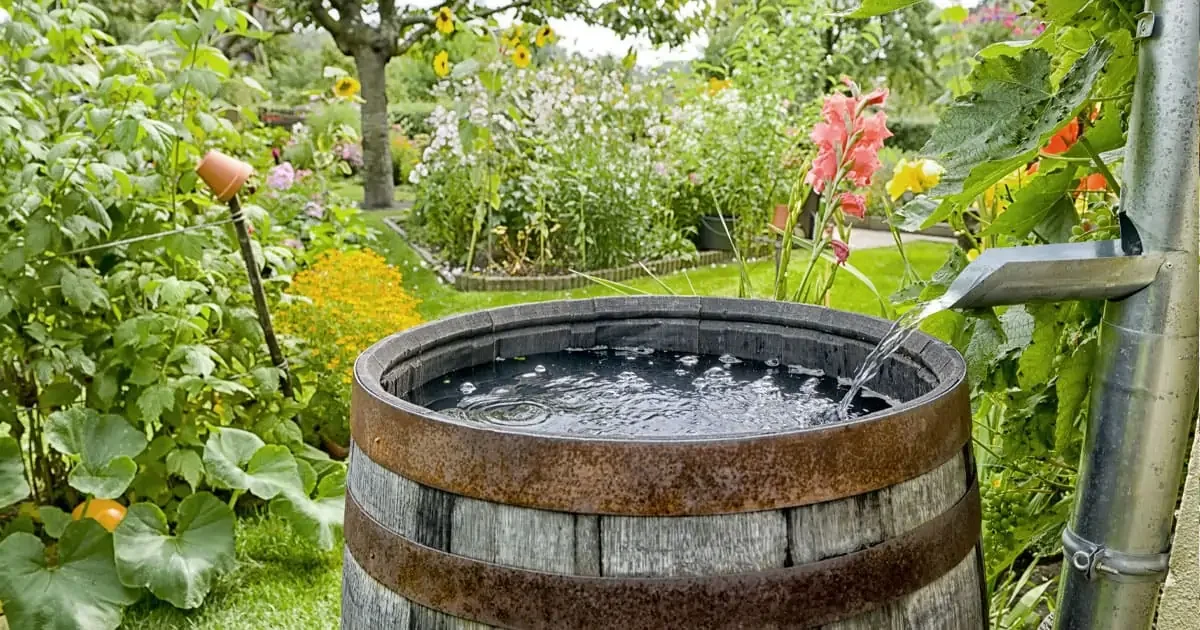
Catch and store rainfall for gardening.
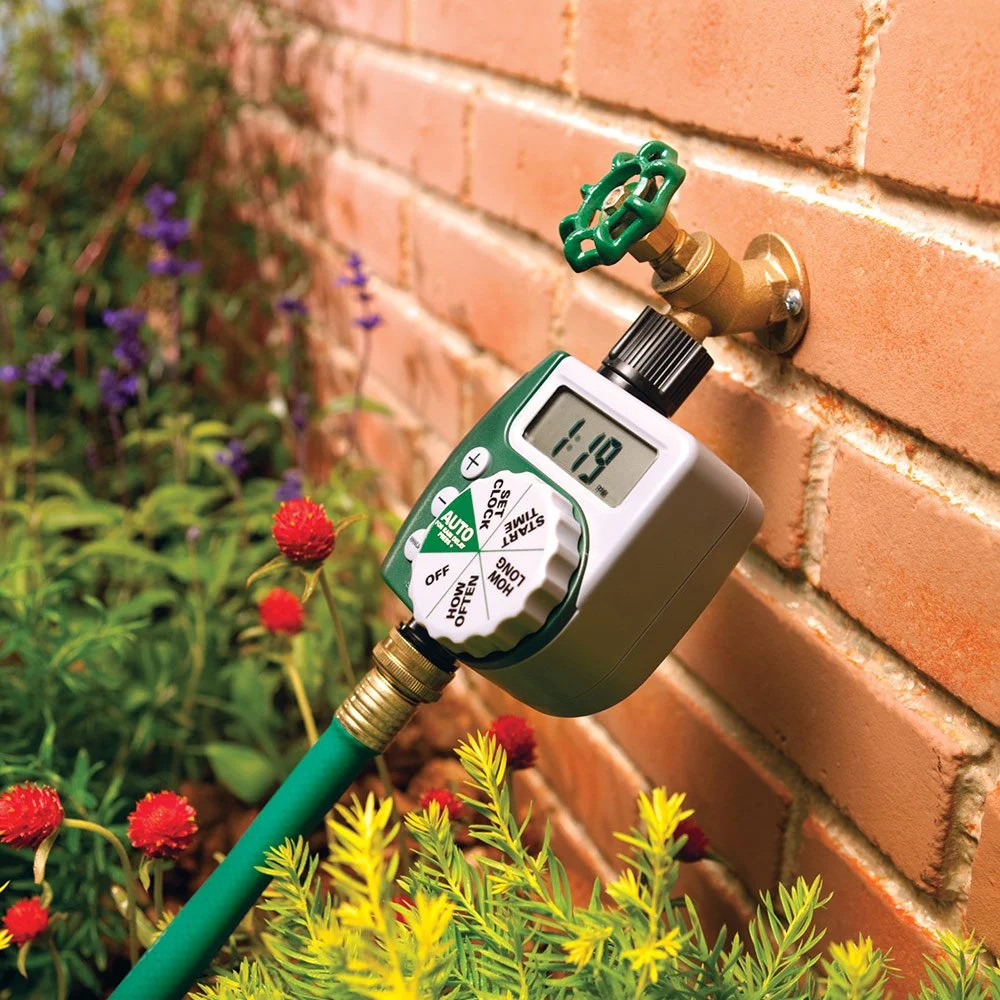
Use an automated watering system to time watering for early and late in the day. Turn it off on rainy days.
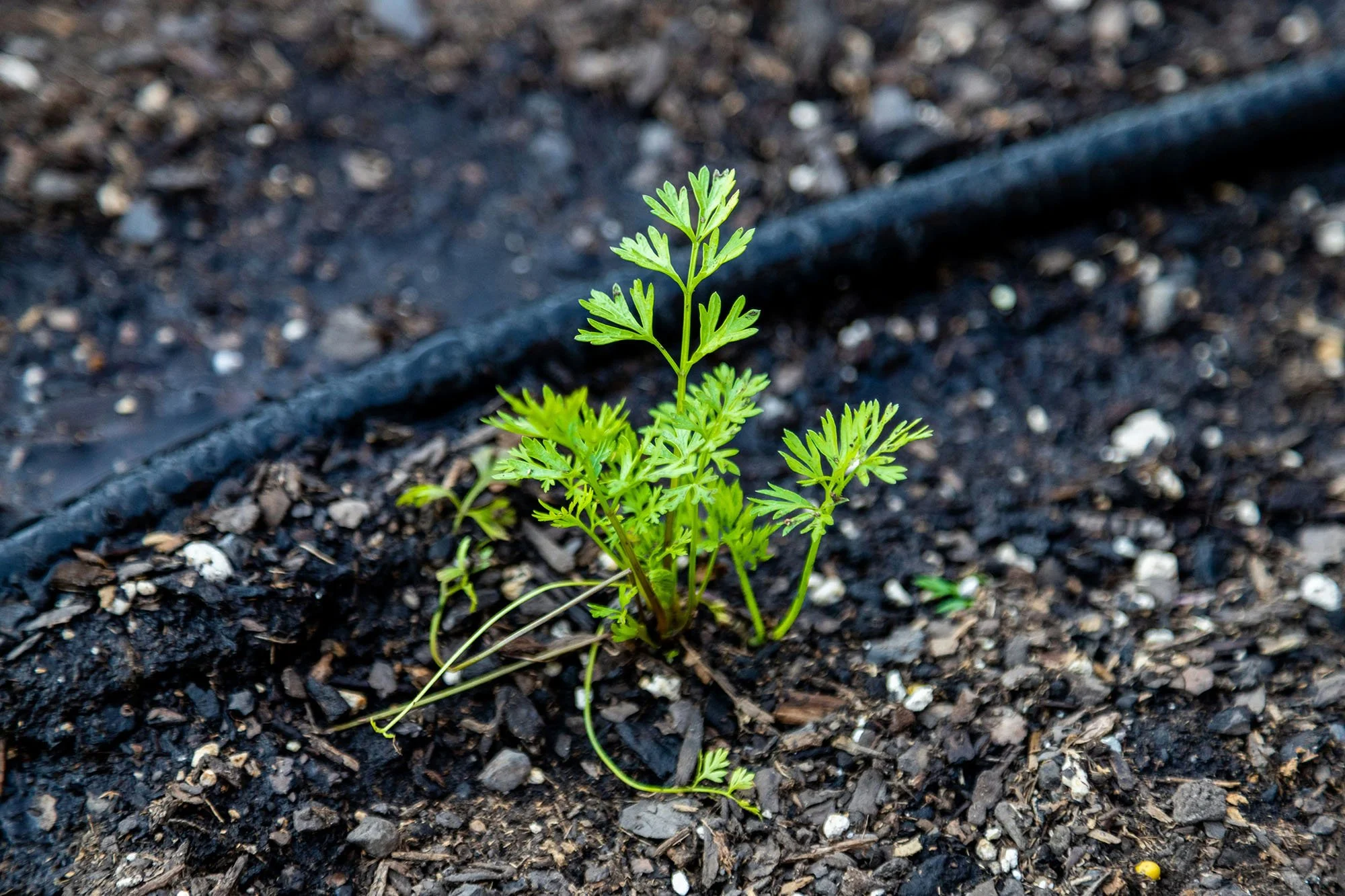
Use drip irrigation to water your garden. It uses water more efficiently than sprinklers. And don’t forget to mulch!
Let lawns go golden in the summer. Your grass won’t die.

Inform guests from the mainland of our Island’s limited water supply, and ask them to help keep consumption down.

Fix leaks. You can check for leaks by shutting off all of your taps and checking your water meter. (Detection tablets are helpful for checking toilets for leaks).
Monitor your water bills. A high charge may indicate a leak, or a need to change water use practices.



Collect and use unneeded water. For example: as you wait for tapwater or shower water to get hot, collect the cold water and use it to water plants.
Help keep our water clean
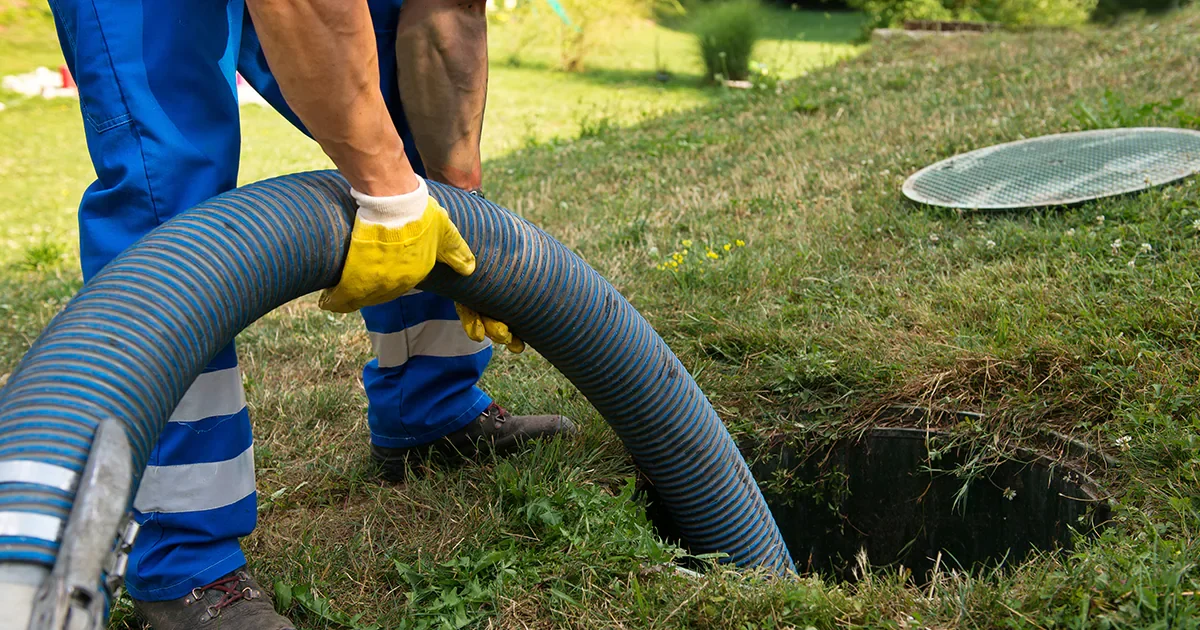
Maintain your septic system, and get it pumped every 3-5 years.
Keep pets and livestock away from streams to avoid pollution, erosion of streambanks, siltation, and disturbance of fish and wildlife.

Use low-phosphate soaps and detergents. Surplus phosphorus can cause toxic algal blooms in our lakes.

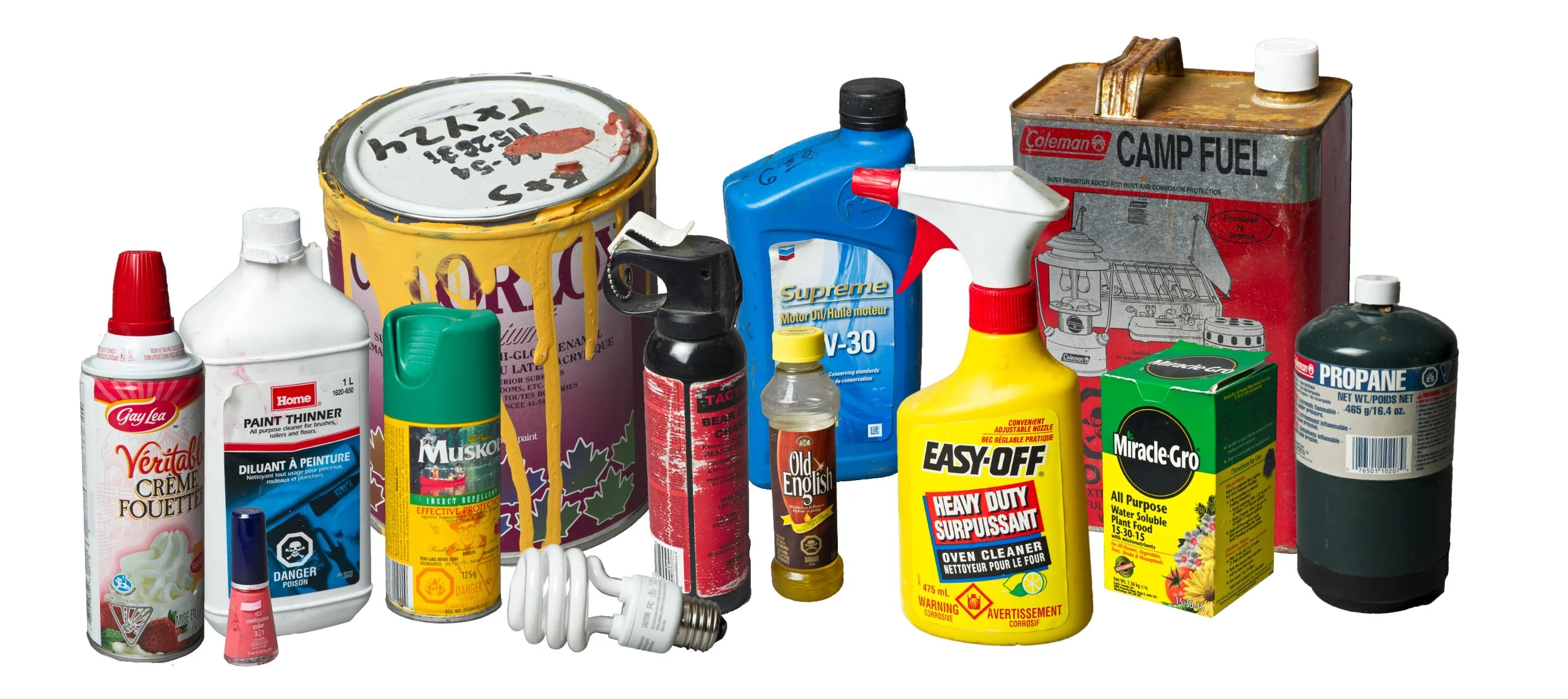
Dispose of toxic chemicals responsibly. Paints, oils, and gasoline runoff can contaminate drinking water sources, including wells.
Never put pharmaceuticals in drains or toilets. Return unused medications to the drugstore.

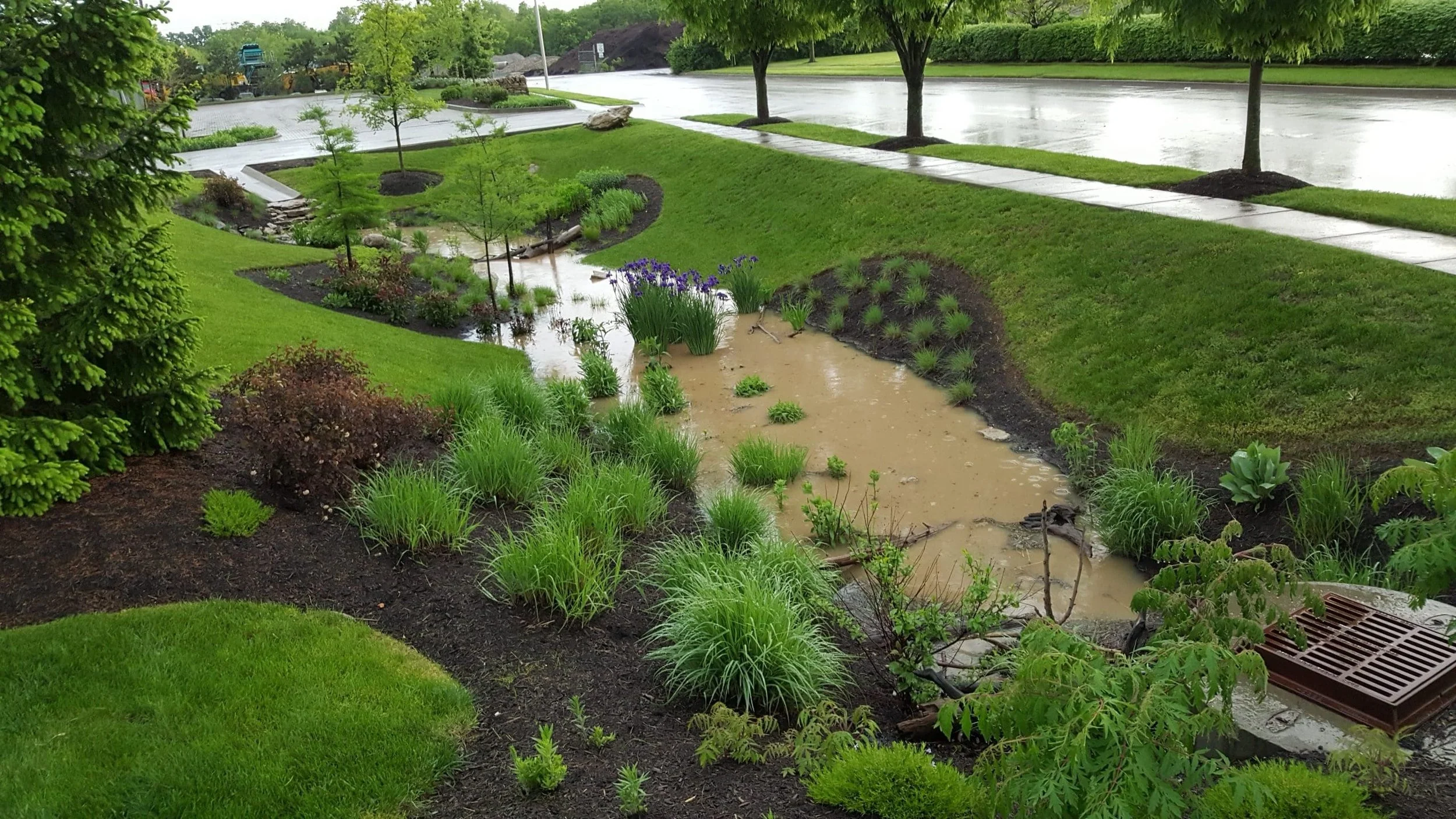
Slow the flow to reduce erosion. Identify where soil erodes during hard rains, and reduce this by building bioswales and/or planting vegetation.
Increase soil permeability
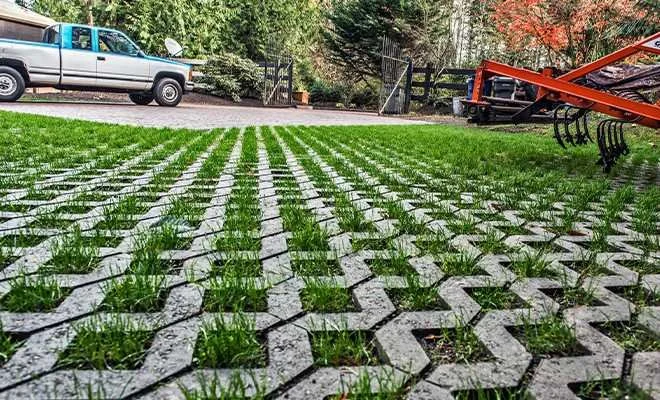
Replace hard surfaces with gravel or interlocking stones to allow more natural percolation of water into the soil.
Rainwater collection & gardening
Salt Spring Island gets plenty of rain — just not in the summer when it is most needed.
Rainwater collection can help bridge the gap.
See our Best Practices Guide for comprehensive advice on rainwater harvesting on Salt Spring Island
Musings of a rainwater gardener
Sharon Bywater describes her experience with setting up and maintaining a rainwater collection system.
Ms. Bywater also offers free tours of her property and water system. Call 250.537.5000 to book.
-
Climate change is here. On July 3 of last summer, the province declared Level 4 drought. This fall, record-breaking rainstorms challenged communities all over BC. It’s clear that each and every one of us must take on the responsibility of changing our ways. One of the actions to seriously consider is creating some of your own water supply to ease the burden on surface and groundwater sources. The simplest and most affordable way to do this is to collect rainwater for gardens and outdoor chores.
In my experience, rain barrels are like peanuts: there is no stopping at just one! My partner and I began our rainwater journey about 20 years ago with the installation of one 65-gallon barrel. When we saw how quickly it filled, we were hooked! Our home is on an approximately ¼-acre parcel, and using 65-gallon recycled food-grade plastic containers made it affordable to grow the system over time while determining how much holding capacity was needed. Connecting the containers allowed us to fit them into areas where the down spouts had the greatest water flow. Gravity then carried the water to the garden below, saving us money on pumps and the power to operate them.
Our garden has been supported by rainwater alone for many years now, including last summer’s drought. Our catchment holds 4500 litres (about 1100 gallons) of water. If you’re paying consumption fees for water, you’ll find the savings in reduced water use will offset some of the cost of your catchment system over time. When the rain begins in the fall, we use overflow hoses to steer water away from the house and towards dry areas of the property that are in need of a good soaking. Be aware that you are not directing water into your neighbour’s yard.
Creating your own water supply is the first step in becoming a rainwater gardener. I will be writing future articles on mulching, designing your and flower gardens for water efficiency, and other water-conserving practices. Rainwater catchment systems can be as unique as the people who use them. They can be as simple as a row of garbage cans lined up under the edge of a corrugated roof. Winter is the time to get into your garden, look at roof surfaces, think gravity, search online, or hire one of our local experts. Point being, just get started on your water conservation path!
If you’d like to set up a time to see our garden’s rainwater catchment system, feel free to call me at 537-5000. Another excellent source of information is the SSWIWPA non-potable rainwater resources online for more on rainwater catchment systems.
-
It’s an early spring morning. Robins, towhees, juncos, and others are busy eating any remaining berries and seeds, while others dig in the beds, hoping to unearth some delectable protein. From a human perspective, this is “our garden”; in reality, it’s a shared environment. As a conservationist and rainwater gardener, I strive to maintain biodiversity and to use only the water from my catchment system for the garden and outdoor chores.
Mulching is key in reducing the amount of water needed. Think of the garden as a forest — all vegetation that falls to the ground will break down over time, ensuring healthy, moisture-retentive soil for the future. Apply this lesson from nature to your gardening practice: plant material that comes out of the garden goes back on top of the soil in the form of a mulch.
We make about 90% of our garden mulch, and the easiest to make is leaf mould. It is largely made by fungal activity, which means it does not require heat to trigger the fungi and does not require turning. We have three leaf bins, each holding about 1 cubic metre of plant material. In the fall, leaves are gathered from the garden (and a generous neighbour) to fill two of the bins. If you have a mulching mower, you can mow the leaves first, and they’ll break down in half the time. The third bin is used to hold the finished leaf mould from the previous fall, which will go onto beds in late winter and early spring. Soft prunings, weeds, and grass clippings are also added to the bins throughout the year.
Another mulching practise is putting plant material directly onto soil while doing routine maintenance. For instance, fallen fir branches will go right under acid-loving plants, and weeds can be left to dry on the soil so long as they don’t have seed heads. Compost can be used as a mulch, but I find it breaks down far too quickly. My preference is to top dress the soil with compost, then add a thick layer of mulch on top to protect soil structure and microbial life.
Our garden has a considerable number of shrubs and hedges that require yearly pruning, so we use a garden chipper to provide us with woody mulch while using about one gallon of gas per year, a much smaller carbon footprint than mulches delivered to the island. The mulch we do purchase is two or three bales of straw grown on Salt Spring. It is long lasting, keeping the root zones of plants cool and moist all summer and protecting against soil erosion through the winter. Minimum depth for mulch is 2 inches but 4 inches (10 cm) is ideal. Don’t skimp to make mulch go further; it is better to do half the area properly.
I cannot stress enough the importance of mulch. It is a soil conditioner, retains moisture in the soil, supports biodiversity, and is a weed suppressant. Get out into the garden, do some mulching, and become a steward of the soil.
-
The weather extremes of 2021 and 2022 make it clear that our gardening practices must evolve if we are going to create resilient garden ecosystems. Not only do we have to be water efficient, we should also be thinking of how we can support biodiversity in our plant choices.
This is a list of native and non-native plants which I grow. All of the varieties I have chosen are drought tolerant, provide for beneficial and/or pollinating insects, supply food for our fine feathered friends and are, in my experience, deer resistant.
Native Species: Woolly sunflower (Eriophyllum lanatum) – herbaceous perennial groundcover; Pearly everlasting (Anaphalis marcgaritacea) – perennial flowering herb; Oregon grape (Mahonia nervosa) – ground-cover with edible berries; Tall Oregon grape (Mahonia aquifoloium) – shrub, great for informal hedges; Red flowering currant (Ribes sanguineum) – shrub, foliage is food for butterfly larvae; Oceanspray (Holodiscus discolour) – tall shrub, commonly called “ironwood” reflecting the hardness and strength of its wood. (If you want more information on good native plants, check out these lists: transitionsaltspring.com/fire-resistant-native-plants-for-the-gulf-islands-south-eastern-vancouver-island/ or saltspringconservancy.ca/portfolio_category/flowering-plants/)
Non-Native Species: Summer bells (Allium Bulgaricum) – naturalizing bulb, lightly scented; Globe thistle (Echinops ritro) – herbaceious perennial; Turkish or Jerusalem sage (Phlomis russeliana) – perennial, with a tall yellow flower spike that looks like a Dr. Seuss illustration; Pale yellow-eyed grass (Sisyrinchium striatum) – clump-forming perennial; Firethorn (Pyracantha) – large thorny evergreen shrub; and Escallonia – evergreen shrub – various species with flower colour options.
Fall is just around the corner — a good time to think of change in the garden. We will be one of the gardens and rainwater systems included in the Rainwater Harvesting Tour on September 25, 2022, sponsored by Salt Spring Watershed Protection Alliance. Come by and look around for more ideas!
-
The spring garden is coming to life despite the dry fall/winter with its temperature extremes, random dumps of snow, and blessed rain. With the rain catchment full, my spirit is regenerated as I start the food garden.
Ninety percent of our fruit and veggies are grown in containers. This was an evolutionary process as we realized the amount of water and nutrition that nearby trees were drawing from our raised beds. Last spring, we finally transplanted our raspberry canes from a raised bed into large containers. The end result was the plumpest, sweetest, and most plentiful crop in 28 years while using about half the water!
A light soil mix is crucial for container growing. Recipes to blend your own mix can be found on the Internet or you can purchase ready-to-go organic blends. Watch for ones that use coir (coconut husks) to replace native mosses. It is not necessary to replace all the soil each year; just replenish with leaf mould, compost, lime, bone meal, and any of the amendments you may use in your raised beds. Even lasagna gardening methods could be applied to large containers—just keep the soil well aerated. Heavy feeders like tomatoes will appreciate a boost with an organic fertilizer during peak season. Black nursery pots can get very hot in the summer and potentially damage root systems.
Simple solution: wrap pots in burlap, towels, or even cardboard to keep roots cool and slow evaporation. Of course, a thick mulch should be used on top of the soil to hold moisture in.
I call our food garden the recycling depot as our planters have all had previous lives. An old laundry sink, enameled washing machine drums, even an old, enameled oven liner are put to use. Large plastic pots came from friends and neighbours that no longer needed them. Drip trays will keep thirsty tree roots from making their way into the drainage holes of your pots and maximize water efficiency, allowing the roots of your plants to take up any overflow.
Resist overplanting your containers. While your tomato plant may look overwhelmed when first potted up, once it gets growing, its roots will need space. Here is a short list of some of my favourites and the container size I use: Sungold cherry tomato 1 per 18” w x 15” h; garlic 7 per 17” w x 22” h; runner beans laundry sink 12 seeds per 17” w x 23” h (two containers this size provided us with enough beans to eat fresh and freeze for winter soups!); raspberries 4 to 6 canes per 17” w x 14” h; lettuce 1 head per 6” pot or mesclun blends can be seeded thickly into shallow 12” pots; strawberries approximately 15 per 36” long 17” wide troughs; snap peas have been grown successfully in anything from a 5 gallon to 17” w x 22” h container.
-
I am pleased to share with my fellow water nerds that yet again our rainwater catchment continues to provide our food and flower gardens with water throughout the ongoing drought.
The sporadic rainfall certainly helped but equally important is all the mulching we do. A thick 2” to 4” mulch reduces evaporation, controls erosion, maintains biodiversity, and saves the gardener more work than the job of mulching. Fall is the time to rake up leaves, spread them on garden beds, and fill bags or bins to use next spring and summer.
We’re experiencing a record-breaking drought, and we all must create some of our own water supply to ease the burden on our surface and ground water sources. Rainwater catchment for outdoor use can be simple and affordable.
If you would like to see our DIY system, we’re happy to give tours. Please call 537-5000 to arrange a time.
-
Here we are in the year 2025, a year that sounds futuristic to me, or is it ominous? Having grown up with three older siblings through the 60s and 70s, I sang along to songs like In the Year 2525, Big Yellow Taxi, and Marvin Gaye’s Mercy Mercy Me. Later I was exposed to books like Rachel Carson’s Silent Spring, The Population Bomb, and the classic Walden by Thoreau.
My father took me birding and taught me how to identify birds and about the habitat they need to thrive. Inevitably, these lessons would lead to his explaining how poorly planned development was impacting the survival of the very birds we were spotting.
People have been talking, singing, and writing about our collective impact on Mother Earth for generations. Much like the civil rights movement, despite the hard work done by many, we are not as far as we should or need to be. Climate change is here: 2024 went out with a bang of extreme windstorms and deluges of rain that caused power outages and flooding up and down our coast. As individuals and a community, we must pull together and allow ourselves to be humbled by the power the Earth and the Atmosphere hold upon us.
My intention is not to overwhelm but to empower people to make change in their lifestyles that will help mitigate the impacts of climate change. We must be judicious with our ground and surface water resources. Growing some or all of our own food while stewarding soil biodiversity is another important step to take. Using rainwater catchment for your garden and outdoor chores will take the pressure off our potable water sources, and our gardens will be grateful for untreated water and a thick layer of mulch.
Our garden has been fuelled by rainwater exclusively for about 20 years now. As the food garden winds down, we convert our rain catchment system into a stormwater overflow system. Garden hoses are replaced by 1.5-inch diameter hoses that handle the heavy rains efficiently. The hoses steer water away from our house to outlying areas of the garden that receive little or no water in the dry periods. Keep in mind that you are not steering water too close to your property line and creating an issue for your neighbour.
Rainwater catchment systems need not be expensive or complicated. There is till time to start a system for the upcoming growing season. If you would like a tour of our affordable DIY system, please call Sharon Bywater at 250-537-5000.
-
According to the rain gauge in our garden, upwards of 16 mm of rain fell over 24 hours on April 6, which seems fitting for a Rainwater Catchment tour. The rains didn’t stop 20 SSI Garden Club members from attending the event that we hosted in our garden, sponsored by the Water Preservation Society. As one tour participant pointed out, “There is no such thing as bad weather, just bad clothing choices.”
Providing education about Rainwater Catchment systems ties into the WPS mandate of promoting awareness of the value of water resources and sharing information about ways to conserve water. Gardeners have the opportunity to mitigate some of the impacts of climate change on our limited water resources by storing water collected during the rainy season and using it during the dry growing season. Creating systems for outdoor use doesn’t have to be complicated or expensive if you work with gravity, Do-It-Yourself, and use some recycled materials. Time was spent showing and explaining how to create a system specific to individual needs and the ecosystem in which you garden.
A mulching talk / workshop was also provided as these two practices go hand in hand. Mulching maintains soil moisture, reduces weeds and enriches the soil. It helps to think of your garden as a forest; all organic materials from the garden go back on the garden. Maintaining soil biodiversity in this way is another step that gardeners can take to support the environment and have a healthier garden while saving themselves work.
We had a lot of fun exchanging all sorts of gardening tips. The attendees weren’t the only ones learning as we also got the benefit of hearing the experiences of the club members. We look forward to hosting another tour with the Garden Club in the near future.
Links, brochures, and posters




School programs & resources
View data from weather stations installed on District 64 schools.


Colouring pages from the Pacific Streamkeepers (Government of Canada)

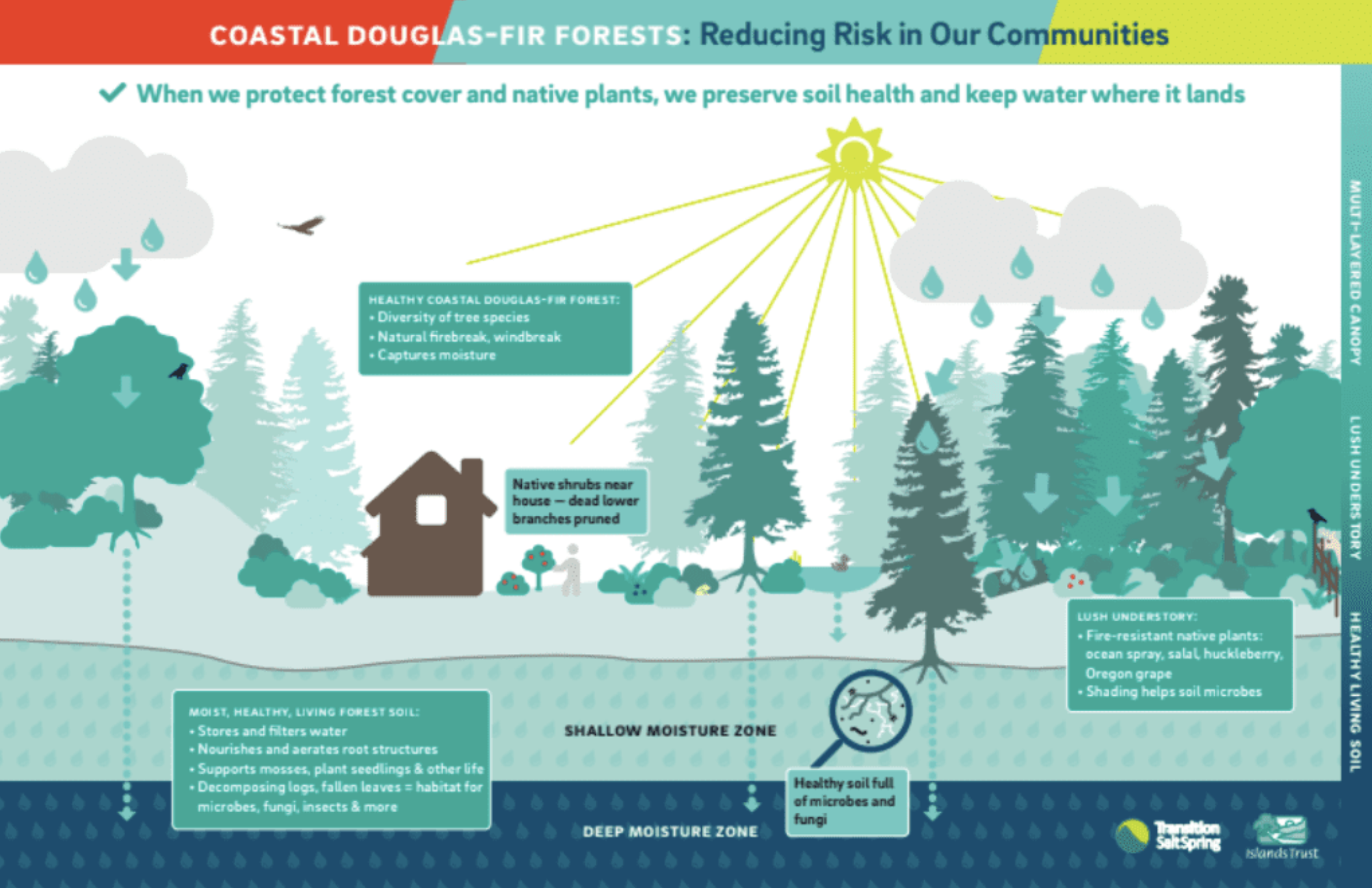
Resources on Coastal Douglas Fir rainforests (Transition Salt Spring)
Maps of waterways near SSI schools:
North SSI Central SSI

